Swiss Steel Group
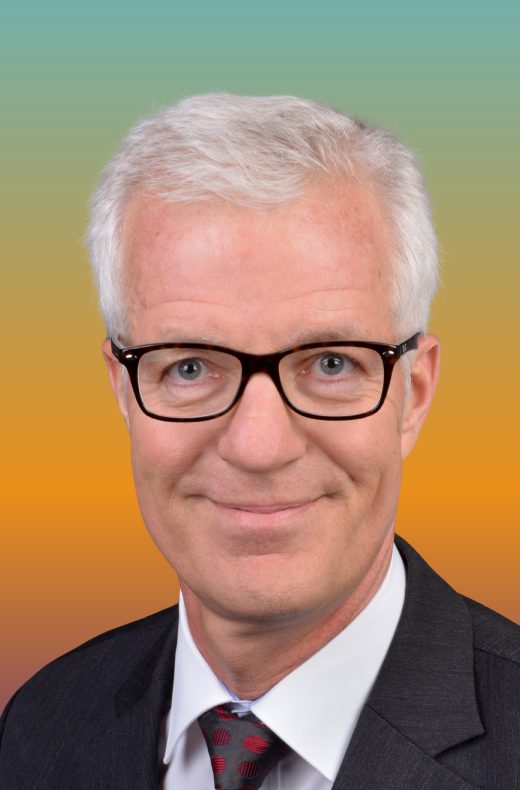
Gregor Ebbers
Can you briefly introduce yourself and your role within the HYDREAMS project?
My name is Gregor Ebbers, I have been with DEW for over 35 years and am in charge of investment management. For several years now, I am responsible for investments and special tasks, especially at the Krefeld site, and act as the project manager for the HYDREAMS project together with my team colleagues Dr. Jenna Depka and Dr. Hans-Günther Krull.
How does the collaboration within HYDREAMS align with your company’s sustainability goals?
With the HYDREAMS project, we are part of the future perspective of decarbonization of the European steel industry, towards the CO2-neutral production of high-quality stainless steel products. Sustainability, environmental protection, safety and future prospects are the goals of our company, which we can significantly support with the use of hydrogen. We see ourselves as part of this vision to preserve industrial production in Europe.
What excites you most about the HYDREAMS project and its mission?
I consider it a great honor and a special challenge to be able to actively participate in the transformation of our industry. Only through the tireless commitment, the ideas and the implementation power of all employees in the steel industry will it be possible to make the production of stainless steel and steel products even more efficient and sustainable. The use of hydrogen as a fuel gas to heat steel products enables CO2-neutral production of steel with minimal NOx emissions.
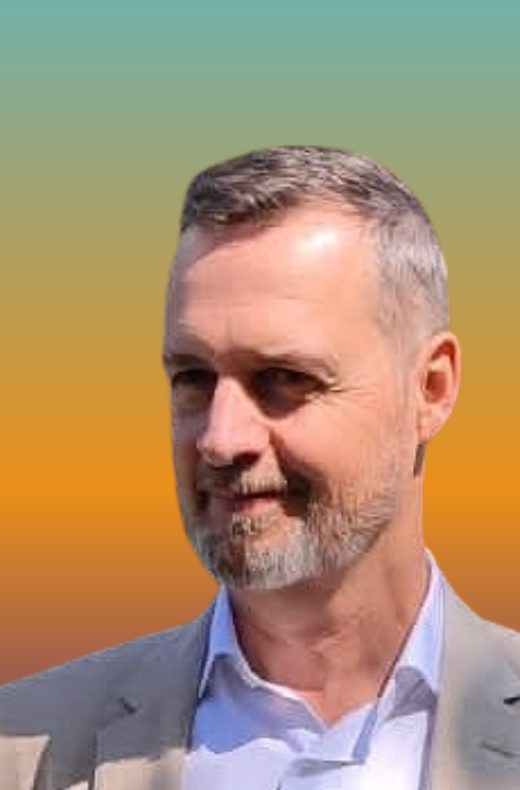
Laurent Sieye
Can you briefly introduce yourself and your role within the HYDREAMS project?
My name is Laurent Sieye. I am Sustainability manager in UGITECH, long products stainless steel manufacturer and French entity of Swisssteel Group. In the HYDREAMS project, I am coordinator of the project in charge of driving project management for the consortium of partners. UGITECH will also implement 2 demonstrators in Ugine plant. 1st demonstrator will test O2 enrichment and oxy-combustion on a walking beam bloom reheating furnace before rolling mill. 2nd demonstrator will check the feasibility to use air / hydrogen and oxygen / hydrogen combustion in a coil annealing furnace.
How does the collaboration within HYDREAMS align with your company’s sustainability goals?
UGITECH and SWISSSTEEL Group are fully committed to reduce their carbon footprint in the near future. Hydrogen is a key player in our decarbonization roadmap aligned to 2030 and 2038 targets of SBTi program.
What role do you see hydrogen playing in the future of steel production?
Hydrogen is the main contributor to reduce GHG emissions in the steel industry, not only by replacing blast furnace with DRI produced thanks to hydrogen but also for thermal equipment on downstream process. SWISSSTEEL Group as steel manufacturer with EAF intend to demonstrate the feasibility of this 2nd approach thanks to HYDREAMS project.
Martin Stref
Can you briefly introduce yourself and your role within the HYDREAMS project?
I am Martin Stref, research engineer at Ugitech, part of Swiss Steel Group. I contribute to the HYDREAMS project on the modelling side, by performing numerical simulations of the process of steel production among other things.
How does the collaboration within HYDREAMS align with your company’s sustainability goals?
Innovation and sustainability are among the core values of Ugitech and Swiss Steel Group. HYDREAMS provides us with the perfect opportunity to innovate while significantly reducing our carbon emissions.
What excites you most about the HYDREAMS project and its mission?
Modelling the impact of hydrogen on the process of steel production is an exciting challenge! It is even more motivating knowing that this brings us closer to our long-term environmental goals.

Dr. Hans-Günter Krull
Can you briefly introduce yourself and your role within the HYDREAMS project?
My name is Hans-Günter Krull and I work in quality assurance at Deutsche Edelstahlwerke. Within the Hydreams project, I am jointly responsible for examining the influence of the conversion from natural gas to hydrogen in heating on the product properties.
How does the collaboration within HYDREAMS align with your company’s sustainability goals?
Hydrogen technology is a real alternative, especially for steels with many heat treatments or large dimensions that cannot be easily converted to electric heating, for example.
What excites you most about the HYDREAMS project and its mission?
Modelling the impact of hydrogen on the process of steel production is an exciting challenge! It is even more motivating knowing that this brings us closer to our long-term environmental goals.
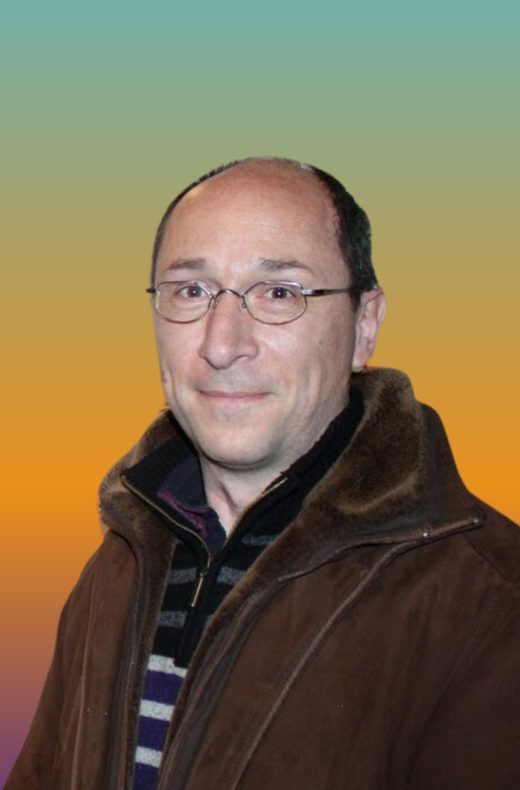
Christian Deville-Cavellin
Can you briefly introduce yourself and your role within the HYDREAMS project?
Working at Ugitech’s Research Center, I — Christian Deville-Cavellin — am responsible for the Fabrication pole — a team of 20 persons working on steelmaking, hot rolling, heat treatment, numerical simulation, and prototyping —, and an expert about stainless steelmaking and heat transfer. Within Hydreams, my work consists in studying the hydrogen combustion characteristics, and its impact on stainless steel scales and refractories. I’m also contributing to the numerical simulation effort for the bloom reheating furnace, whose decarbonation is at the center of the project.
How does the collaboration within HYDREAMS align with your company’s sustainability goals?
Hydrogen used in combustions has a direct beneficial impact on the CO2 emissions. The other impacts, specifically on product quality, are to be addressed to make sure the hydrogen solution is an answer to the sustainability goals of our company, without impairing its performance.
What excites you most about the HYDREAMS project and its mission?
Hydreams opens a road to innovations we could not have done without it. Any process change in a heavy industry context is difficult to test, even more to industrialize. The project leads us to innovations, not only beneficial to the environment, but also to our company’s performance. Decarbonized energy is also a more efficient use of energy.
Olivier Saunal
Can you briefly introduce yourself and your role within the HYDREAMS project?
I am Olivier SAUNAL from Ugitech SA. Working on special project department, I’m responsible for transforming idea into concrete reality.
How does the collaboration within HYDREAMS align with your company’s sustainability goals?
Our company is deeply committed to sustainability, and HYDREAMS provides us with the perfect platform to accelerate our efforts to reduce carbon emissions, while developing innovative hydrogen solutions that align with our long-term environmental goals.
What excites you most about the HYDREAMS project and its mission?
Open new routes for decarbonization, adapting, developing, creating new technical solution that apply to our needs, within a tight framework.
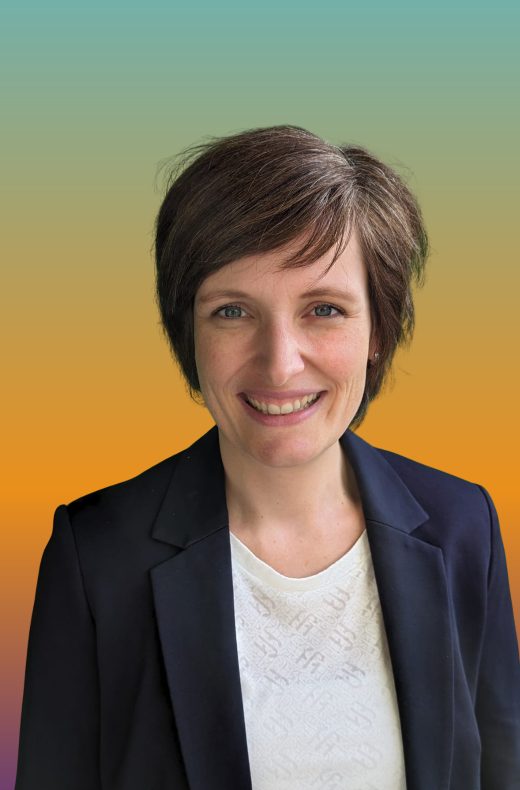
Dr. Jenna Depka
Can you briefly introduce yourself and your role within the HYDREAMS project?
My name is Jenna Depka. I am leading the technical customer support stainless steel for Deutsche Edelstahlwerke Witten/Krefeld. In this position it is my task in this project to transfer the idea and the results of this project to our customers and in the time when we prepared the proposal for the project to bring the demand of our customers for CO2 reduced products into the project.
How does the collaboration within HYDREAMS align with your company’s sustainability goals?
I think a project like HYDREAMS is the mandatory step to achieve our sustainability goals. With HYDREAMS we are able to learn how to reduce our CO2 emissions in the whole downstream process.
What innovations or technological advancements from HYDREAMS are you most looking forward to implementing?
Of cause there are many points that are necessary and essential to learn about but I am really excited to get knowledge on how we can adapt our existing burners in the furnaces with our own manufacturing possibilities. With this knowledge we would be able to save investigations in external resources and would be able to adapt to hydrogen as an energy sources once green hydrogen is available.